


Introduction
It’s more important than ever to keep your online identity safe in 2026. From mobile banking and remote work tools to healthcare apps and cloud software, nearly every aspect of life depends on secure authentication. Unfortunately, cyberattacks, phishing scams, and credential leaks continue to grow each year. Password-only systems are no longer enough to protect sensitive data. This is where CalforAuth becomes essential.
Designed as a modern authentication and identity management solution, It helps individuals and businesses secure login systems, enable multi-factor authentication (MFA), and manage digital access safely. While only a small percentage of internet users actively strengthen their login security, those who implement advanced authentication solutions significantly reduce their risk of cyber threats.
In this in-depth guide, you’ll learn how Calforauth works, why it matters in today’s technology landscape, how it compares to traditional authentication systems, and how it supports safer digital access.This guide will help you keep your digital life safe whether you are a business owner, an IT professional, or just a regular user.
What Is Calforauth and Why It Matters in 2026
Modern cybersecurity focuses on identity. Firewalls and antivirus software are no longer enough. Today, identity is the new security perimeter and it is built around that principle.
What is Calforauth?
Calforauth is an authentication and access management system that verifies users before granting entry to digital platforms. It strengthens login processes using layered security mechanisms.
Why It Matters
Cyber risks are increasing because:
- Users reuse weak passwords
- Cloud apps expand access points
- Remote work creates new vulnerabilities.
- Data breaches expose login credentials.
Key Benefits
- Advanced multi-factor authentication
- Encrypted credential verification
- Real-time risk detection
- Role-based access control
- Centralized identity management
By combining secure login technology with intelligent monitoring, It ensures that only verified users can access sensitive systems. In 2026, identity-first security is not optional, it’s a necessity.
How Calforauth Strengthens Secure Login Systems
Usernames and passwords are used in traditional login methods. Unfortunately, passwords can be guessed, stolen, or leaked. It improves this process with layered authentication and contextual analysis.
Traditional Login Weaknesses
- Single-factor authentication
- No device verification
- No behavioral monitoring
- Vulnerable to phishing
How Calforauth Enhances Security
- OTP verification (One-Time Passwords)
- Trusted device recognition
- Biometric authentication support
- Location-based login checks
- AI-driven anomaly detection
Example Secure Login Flow
- The user enters credentials.
- System evaluates device trust level.
- Additional verification is triggered if needed.
- Behavioral data is analyzed.
- Access is granted or denied.
This intelligent login system makes Calforauth significantly more secure than outdated password-only solutions.
Multi-Factor Authentication (MFA) Explained
Multi-factor authentication (MFA) requires users to verify their identity using more than one factor.
Types of Authentication Factors
- Something you know (password)
- Something you have (mobile device or token)
- Something you are (biometrics)
Calforauth integrates adaptive MFA to strengthen digital protection.
Comparison Table: Authentication Methods
| Authentication Type | Security Level | User Experience | Risk Level |
| Password Only | Low | Easy | High |
| Password + OTP | Medium-High | Moderate | Lower |
| Biometric Only | High | Smooth | Low |
| Adaptive MFA (Calforauth) | Very High | Optimized | Very Low |
Unlike static MFA systems, It adjusts authentication requirements based on login risk. Trusted users enjoy smooth access, while suspicious attempts trigger extra verification.
Online Identity Management Made Simple
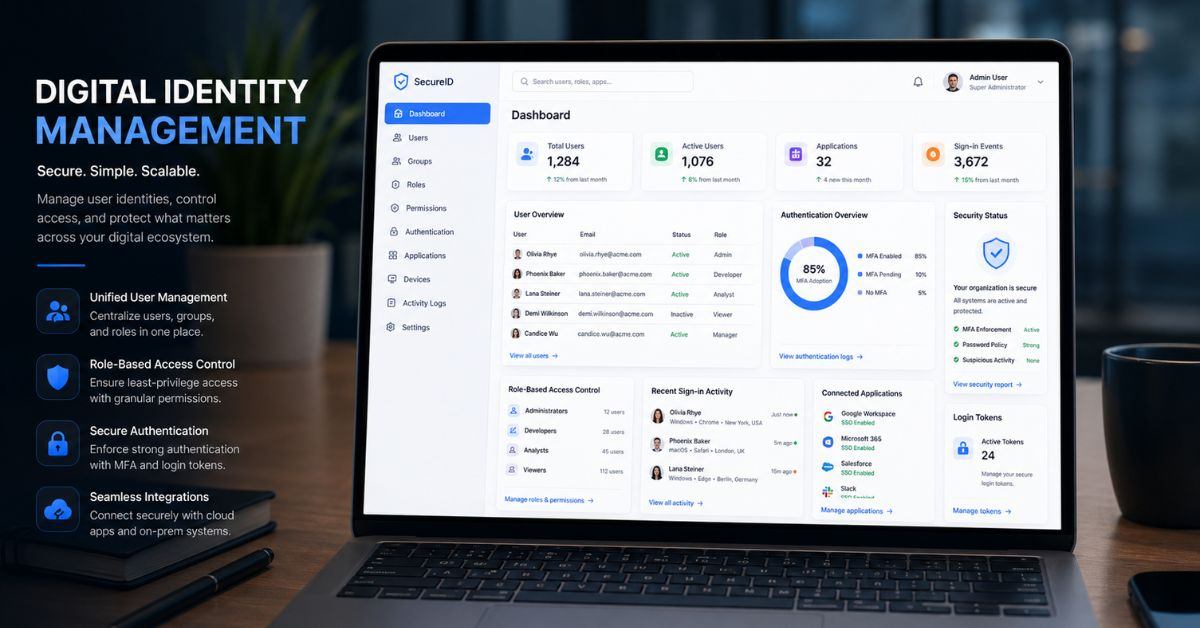
Managing online identity is complex, especially for organizations with multiple users. It acts as a centralized identity management hub.
Core Identity Features
- Centralized credential control
- Single Sign-On (SSO)
- Role-based permissions
- Access logs and monitoring
- Secure identity tokenization
Why Identity Management Matters
Without structured identity control:
- Former employees may retain access
- Admin privileges can be misused.
- Data leaks become more likely
By implementing structured access policies, It reduces human error and improves visibility across digital systems.
Zero Trust Security and Modern Authentication
Zero Trust security follows one rule: never trust, always verify.
It aligns perfectly with this framework.
Zero Trust Principles Supported
- Continuous authentication
- Least privilege access
- Real-time threat analysis
- Device and location verification
Example Scenario
If an employee logs in from:
- A new country
- An unknown device
- Outside normal hours
The system can:
- Trigger extra MFA
- Restrict certain permissions
- Alert administrators
This approach makes it ideal for businesses adopting Zero Trust architecture in 2026.
Calforth vs Traditional Authentication Systems
Many organizations still rely on outdated login systems.
Here’s a clear comparison:
| Feature | Traditional Auth | Calforauth |
| Password Protection | Basic encryption | Advanced tokenization |
| MFA Capability | Limited | Adaptive MFA |
| Real-Time Risk Analysis | No | Yes |
| Zero Trust Compatibility | Weak | Strong |
| Compliance Support | Limited | GDPR & HIPAA aligned |
Traditional systems focus only on verification. It focuses on verification plus intelligence. This makes it future-ready, scalable, and far more secure.
Case Study: Real-World Implementation
Case Study 1: FinTech Company
Challenge:
- Rising phishing attacks
- Account takeover incidents
- Compliance audit issues
Solution:
- Implemented MFA and SSO
- Activated risk-based login alerts
- Enabled centralized monitoring
Results After 6 Months:
- 70% reduction in unauthorized access
- 45% decrease in password reset requests
- Successful compliance audit
Case Study 2: Remote Startup
A cloud-based startup integrated Calforauth across all SaaS tools.
Results included:
- Improved login efficiency
- Reduced security incidents
- Better employee access control
These examples show measurable security improvements.
Cloud and SaaS Integration Capabilities
Modern businesses depend on the following:
- Google Workspace
- Microsoft 365
- AWS & Azure
- CRM and HR platforms
Calforauth integrates seamlessly through the following:
- API-based authentication
- OAuth and SAML support
- Cloud-native architecture
Benefits
- Centralized user management
- Reduced IT workload
- Enhanced compliance tracking
- Single Sign-On convenience
Its flexibility makes it suitable for hybrid and remote work environments.
Compliance, Privacy, and Regulatory Support
Global regulations demand strong identity protection.
Calforauth supports compliance with the following:
- GDPR
- HIPAA
- CCPA
- ISO 27001
Compliance Features
- Encrypted authentication flows
- Audit-ready access logs
- Consent-based identity verification
- Role-based data restrictions
Compliance is not just about avoiding fines, it builds user trust.
The Future of Digital Authentication
Authentication technology is evolving rapidly.
Key trends include:
- Passwordless login
- Biometric verification
- AI-driven fraud detection
- Decentralized digital identity
CalforAuth is designed to adapt to these innovations.
Future Capabilities
- Fully passwordless systems
- AI-powered risk scoring
- Cross-platform identity portability
- Verifiable digital credentials
As cyber threats become more advanced, intelligent authentication systems will define digital security standards.
FAQs
Is Calforauth suitable for small businesses?
Yes. It scales easily and provides enterprise-level security without requiring complex infrastructure.
Does Calforauth support passwordless authentication?
Yes. It supports biometrics, device-based verification, and adaptive MFA.
How does it prevent phishing attacks?
It adds multiple verification layers and detects unusual login behavior.
Can it integrate with cloud platforms?
Yes. It works with major SaaS tools using APIs, OAuth, and SAML.
Is it compliant with global regulations?
Yes. It aligns with major data protection standards such as GDPR and HIPAA.
Conclusion
Digital identity security is the foundation of modern technology. Weak passwords and outdated authentication systems are no longer sufficient in a world of growing cyber threats.
Calforauth offers a comprehensive solution for secure login, multi-factor authentication, identity management, and Zero Trust security. It reduces breaches, enhances compliance, and simplifies user access without sacrificing protection.
As identity becomes the primary security perimeter in 2026, adopting advanced authentication systems is a strategic move not just an IT upgrade. By implementing strong identity verification and adaptive security controls, individuals and businesses can confidently protect their digital environments.
